
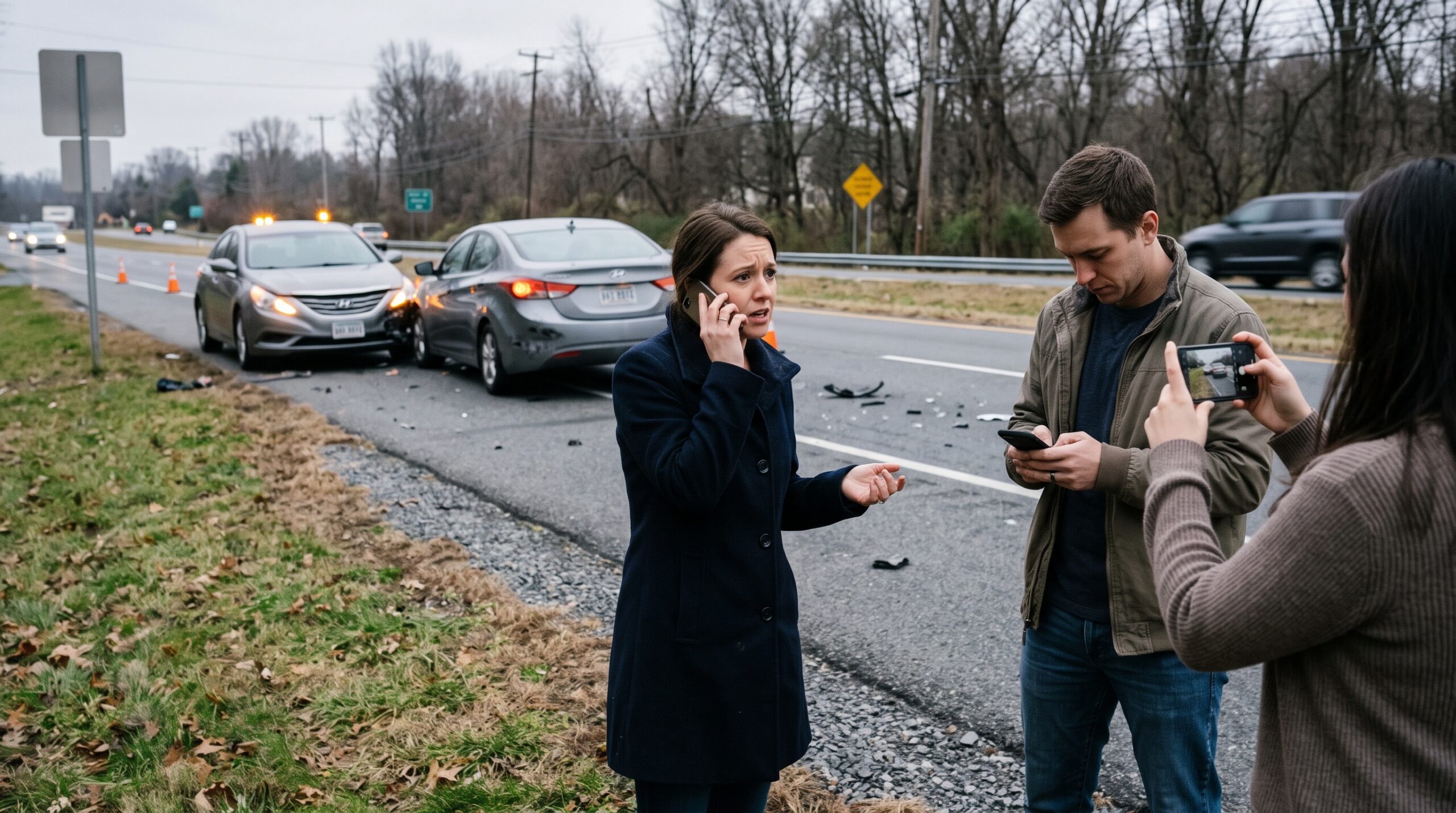
Being involved in a car crash—even a minor “fender bender”—is a disorienting experience. Adrenaline surges, confusion sets in, and you must make decisions quickly. One of the most critical initial choices drivers face is whether to call 911 or report the accident to law enforcement.
While it might be tempting to exchange insurance information and drive away when damage seems minor, doing so can compromise your health, your legal rights, and your ability to secure compensation later.
Here is what every driver in the Commonwealth of Virginia needs to know about reporting auto accidents, legal duties, and protecting your personal injury claim.
What Does Virginia Law Say About Reporting Accidents?
In Virginia, reporting a traffic accident is not just a safety precaution—it is often required by law.
Under Virginia Code § 46.2-894, when a crash causes injury, a fatality, or damage to attended property, motorists must pull over as near to the scene as they can without impeding traffic. In addition, they must:
- Give their full name, home address, driver’s license number, and vehicle registration number to any of the following: state police or local law enforcement, the driver or occupant of the other vehicle, or the owner of any damaged property.
- Render reasonable assistance to anyone injured.
Warning: Leaving the scene without reporting a crash can result in hit-and-run charges—misdemeanor or felony—depending on the amount of property damage and whether anyone was injured.
Why You Should Always Call the Police After a Crash
Even if the other driver begs you not to call the police, or if the vehicle damage appears trivial, dial 911 immediately. Here is why contacting law enforcement is vital:
1. Official, Unbiased Documentation
Police officers usually complete a standardized Crash Report (Form FR-300). This official document details key information about the collision, including:
- Date, time, and precise location.
- Contact and insurance information of all drivers.
- Statements from drivers, passengers, and independent witnesses.
- Weather, road conditions, and lighting at the time of the crash.
- Officer observations regarding driver impairment, speeding, or distracted driving.
- Preliminary fault determinations or traffic citations issued.
2. Preventing “He Said, She Said” Disputes
Without an official police report, the other driver can easily change their account of the accident. A driver who admits blame at the scene may later insist you caused the collision. Getting a neutral police officer to record the crash details creates an objective record and limits the other party’s ability to invent a new version of events.
3. Preserving Vital Evidence
Law enforcement officers are trained to gather objective evidence at the scene. They measure skid marks, analyze vehicle placement, document property damage, and take note of traffic control signals. This evidence is critical for accident reconstruction experts and personal injury attorneys building your case.
4. Detecting Unseen Injuries and Shock
Adrenaline can mask severe injuries—such as concussions, internal bleeding, soft tissue damage, or spinal trauma—for hours or even days after an accident. Calling 911 ensures that Emergency Medical Services (EMS) respond promptly to evaluate everyone involved.
The Danger of Virginia’s “Pure Contributory Negligence” Rule
Calling law enforcement is especially critical in Virginia because of our strict legal standard for personal injury claims known as the contributory negligence doctrine.
Virginia is one of only a handful of jurisdictions in the United States that enforce this harsh rule. Under the contributory negligence doctrine, if the injured person is even 1% responsible for the accident, they cannot recover any damages from the other party.
A clear, accurate police report detailing the facts of the accident, including the other driver’s negligent actions, can be critical to securing compensation for medical bills, lost wages, and pain and suffering.
Step-by-Step: What to Do Immediately After an Accident
After a crash in Virginia, take the following essential actions to safeguard your health and protect your legal rights:
- Check for Injuries & Move to Safety: Assess yourself and your passengers. If safe to do so, move your vehicle out of the flow of traffic.
- Call 911: Request both police and emergency medical responders. Inform the dispatcher if anyone is injured or if traffic is blocked.
- Gather Evidence: While waiting for officers to arrive, take clear photographs and videos of:
- Vehicle positions and damage from multiple angles.
- Skid marks, broken glass, or debris on the road.
- Traffic signs, signals, and weather/road conditions.
- Visible injuries on yourself or passengers.
- Exchange Details: Collect names, phone numbers, driver’s license numbers, and insurance details from all drivers involved. Get contact details from any witnesses.
- Be Mindful of What You Say: Be polite, but do not apologize or make statements suggesting fault (e.g., “I did not see you” or “I am so sorry”). Limit your conversation with the other driver to basic information exchange.
- Provide Accurate Information to the Officer: Stick strictly to facts when speaking with law enforcement. Do not guess or speculate about speed or distances if you are unsure.
- Seek Medical Attention Immediately: Get evaluated by a clinician right away — even if you feel normal — by going to the hospital, urgent care, or your regular doctor so your condition is documented and your treatment can begin right away.
- Consult a Virginia Personal Injury Attorney: Contact an experienced lawyer before speaking with the insurance company’s claims adjuster or accepting any quick settlement offers.
Speak with an Experienced Virginia Car Accident Attorney
A seasoned personal injury attorney can obtain the official police accident report, gather key evidence, negotiate directly with insurers, and pursue the maximum compensation you are owed.
Key Takeaways
Always Call Law Enforcement: Contact 911 after any crash.
Official Reports Matter: The police report is a critical piece of information that documents the details of the accident and the accident scene.
Protect Against Contributory Negligence: Proving 0% fault is vital under Virginia law to secure compensation.
Document and Seek Care: Take photos, seek immediate medical treatment, and consult a trusted attorney.
Contact a Virginia Beach Personal Injury Lawyer

By working with an accident injury attorney in Virginia Beach, you gain access to skilled legal guidance and strong representation. From handling complex legal matters and negotiating with insurers to advocating for you in court, our experienced injury attorneys put you in the best position for receiving fair compensation for your injuries.
We understand the nuances of Virginia personal injury law. We can provide valuable insights into how to approach your case effectively, whether through negotiation with insurance companies or in court.
The injury law attorneys at Preston, Wilson & Crandley, PLC advocate on your behalf, ensuring that you are treated fairly and that your case is presented effectively.
Contact Preston, Wilson & Crandley, PLC at (757) 486-2700.
Follow us on Facebook.